Window Shopping: How Theatres Became Streaming’s Secret Weapon
Why Netflix, Apple, and Amazon are staging cinematic runs not just for box office, but for algorithmic glory.
CONTENT STRATEGYSTREAMING
Adi Tiwary
7/17/20254 min read
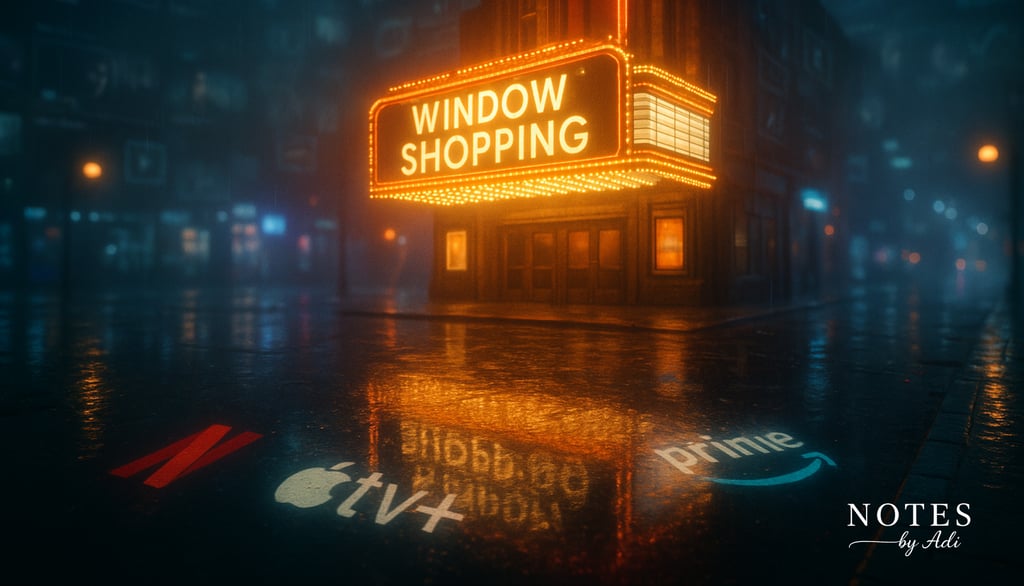

Remember when cinema was dying?
No, really, do you remember that? When theatres shuttered and every think piece asked, "Is this the end of moviegoing as we know it?" Streaming swept in like a hero with snacks and sweatpants. For a minute, it felt like the entire business model of theatrical releases had collapsed for good.
But flash forward to 2025, and we’re seeing something unexpected… It’s a revival. Not just of cinema as a night out, but of cinema as a strategic move. Because here's the twist, it's not the ticket sales pulling studios back to the big screen. It's the data.
That’s right. Theatres have quietly become the MVPs of streaming strategy. Apple, Amazon, Netflix, they’re not rolling out red carpets just for Oscar glamour (though let’s be honest, that doesn’t hurt). They’re doing it because theatrical releases now generate something more valuable than opening weekend buzz: signal data that trains the algorithm.
From Screens to Streams: A Strategic Rebrand
Before we go all algorithmic, let’s rewind a bit to when cinema-going was an event. Seriously, mate, my family made it a whole show. We’d iron our best outfits, grab vada pav on the way, and queue up like it was a festival. Because “Kuch Kuch Hota Hai”, the moment those lights dim and the 70MM magic kicks in.
Back then, theatrical windows were like velvet ropes. You waited, and then you rewatched on VHS or DVD months later (depending on your generation). It was neat, sacred, and profitable.
Then streaming arrived: instant, infinite, and overwhelming. The logic flipped. Exclusivity didn’t matter…visibility did.
And in this crowded, always-on media ecosystem, theatrical runs became something else entirely. They started doing something rare…cutting through. Today, a theatrical run isn’t just about selling tickets; it’s about generating noise. Reviews, critic chatter, social buzz, TikTok edits, and award whispers all of it feeds the algorithm. It tells Netflix, Amazon, and Apple which title to push, when, and to whom.
Case in point: Take Apple’s Killers of the Flower Moon. Modest box office? Sure. But it became Apple TV+’s most-watched film in its first 45 days. Coincidence? Not quite. Same with Amazon’s Red One, a cinema underperformer turned streaming record-breaker. Turns out, the theatrical window isn’t the finale, it’s just the teaser trailer for a data-driven main event. They're like algorithmic launchpads.
How to Teach an Algorithm: Why Signal Beats Box Office
Alright, time to get a bit geeky, because here’s the thing: algorithms? They’re hungry. Not for popcorn, but for signal. And theatrical runs serve up a feast.
Imagine this: your film drops in theatres. It sparks buzz on Twitter (fine, X), trends on TikTok, lands a few think pieces, maybe a meme or two. Critics weigh in…fans debate, and the FOMO spreads. All of this? Pure gold for the algorithm. It’s like shouting into the void and having the void shout back with a homepage banner.
Platforms track everything, box office trends, audience sentiment, critic consensus, and social virality. And these metrics help decide whether your title gets top billing or quietly slips into the "Because You Watched..." graveyard.
In a world where people half-watch while scrolling their phones, this kind of signal-rich content cuts through. Especially when, like, only 20% or so of Netflix users even search for a specific title. That means you’ve got to surface, not be sought out.
And guess what? Data backs it up. A strong theatrical run doesn’t just build hype, it boosts streaming viewership and even nudges subscriber loyalty. All without needing a superhero cape.
Prestige, Popcorn and Platform Flexing
Here’s where it gets juicy. Theatrical releases? They’re not just about prestige, they’re full-on power moves.
Apple drops Napoleon or F1: The Movie in cinemas. Is it chasing box office glory? Not really. It’s telling the world, “We don’t just stream, we create cinema.” Amazon throws down a billion-dollar theatrical slate? That’s not logistics. That’s a brand flex. And Netflix giving Narnia a big-screen moment? That’s a calculated vibe shift, not a fairytale detour.
What’s happening is a bit of a role split:
Apple is going for prestige and awards sparkle.
Amazon wants its theatrical runs to supercharge streaming.
Netflix is still the volume king, but now, it’s dabbling in selective spectacle.
And let’s be real, some of these titles (Argylle, anyone?) don’t land huge in theatres. But they still work their magic behind the scenes: creating buzz, feeding algorithms, extending lifespan.
Theatrical isn’t one-size-fits-all. But for the right title at the right moment? It’s the glitter bomb that keeps on giving.
Hybrid Windows and the Future of Flex
So, about those sacred 90-day theatrical windows? Yeah, they seem toast, in most cases.
Perhaps the new sweet spot sits somewhere between 30 to 45 days. It’s like Goldilocks timing, not too long to lose momentum, not too short to skip the sizzle. Long enough for awards chatter. Short enough to roll that buzz into your streaming debut.
Why does it matter? Because timing is everything in the attention economy. The right window helps a film stay hot, cinematically and algorithmically.
And not all films should take the same path. Big-budget dramas, genre-bending blockbusters, or franchise tentpoles? Let them bask in the theatrical spotlight. But mid-tier thrillers or indie curveballs? They might shine brighter on streaming day one.
Success isn’t just measured in ticket sales anymore. It’s about total platform value, retention boosts, engagement spikes, and brand perception. Theatrical-first is no longer about old-school prestige. It’s about finding the most strategic route to relevance.
Subscribe for free to receive new posts and support my work.
So here’s my take…Theatres as Data Farms
Cinema isn’t dead. It’s just been… recontextualised. In 2025, a theatrical run is less about raking in ticket sales and more about teaching the algorithm what content matters.
Yes, theatres are expensive. Yes, the margins are thin, but for the right project, a theatrical launch functions like a full-scale brand activation and data-rich promo phase. It’s theatrical as marketing. As prestige and as strategic positioning. And dare I say it is still as magical.
Now, what if we reimagined theatres not as box office battlegrounds, but as algorithmic staging grounds? Because in a streaming world drowning in content, sometimes the only way to stand out is by going big.
Thanks for reading Notes by Adi, media musings from the messy middle of creativity and commerce. If you’re building something bold, soulful, or in-between, subscribe to the full archive: aditiwary.substack.com