Bluey is produced in Brisbane by Ludo Studio for ABC Kids. It was co-commissioned by ABC Kids and BBC Studios Kids & Family. Screen Australia helped finance it. Global distribution and merchandise rights sit with BBC Studios.

That arrangement is not a scandal. It is a system speaking honestly about itself.
A locally created, locally produced, publicly co-financed property became one of the most valuable children’s entertainment franchises in the world. The downstream value, the part that compounds over decades, sits offshore. The Australian production company stays in Brisbane making the show. The audience pathway, the licensing income, the spin-off architecture, the secondary windows and the merchandise machinery travel through a different system entirely.
The question this raises is not whether Bluey was a success. It clearly was. The question is what kind of system produces a global hit and lets most of the durable value travel out with it.
That is the machinery question. And it is the question Australian screen policy has not yet decided to answer seriously.
Lab’s argument
Australia is producing globally legible work without the institutional machinery to retain enough value when that work travels. Other regions are starting to organise screen as an industrial proposition rather than a cultural obligation.
The gap is not creative talent. It is structural retention capacity. Producers carrying the next significant Australian opportunity are negotiating inside a system that has not yet decided whether it is in the IP retention business.
Three regions, three different operating questions.
The Gulf is asking how to build a screen economy from capital and infrastructure. Parts of Asia are asking how to finance, package and move projects across borders. Australia is still asking how to commission more local content. That difference is where the value is going to land over the next decade.
The Australian position read structurally
Australia has the creative output. Bluey, Heartbreak High, Boy Swallows Universe, and a broader prestige-export track record across drama and factual. The exportable IP is real. The international buyers are showing up.
Australia has a public funding architecture. Screen Australia, state agencies, the public broadcasters, the producer offset. The supply side has scaffolding.
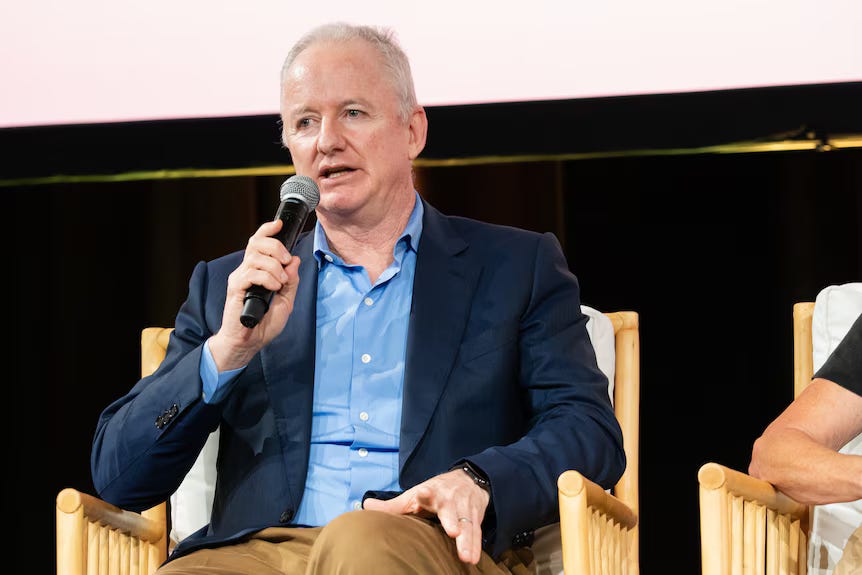
What Australia does not yet have is a settled answer on what happens after a project succeeds. Hugh Marks raised this directly at Screen Forever, saying the future of ABC content was “all about intellectual property” and about creating IP that generates value which can be reinvested into the Australian market. He also said the development-to-screen cycle in Australia can take “three, four, five years” from a strong idea to broadcast.
Screen Producers Australia has been making a related point in submissions. Its argument is that maximalist streamer rights buyouts can leave Australian SME producers as service providers rather than rights-holding companies, and that ongoing IP revenue is what allows production businesses to remain viable across cycles.
Both points sit on the same fault line. Australia knows how to support content getting made. It has not committed to a position on what producers should be allowed, encouraged or financed to retain when a buyer wants the lot.
Quotas help supply. They do not solve value capture. Rebates help cash flow on a single project. They do not build companies that can hold rights across a slate. Funding agencies can subsidise development. They cannot, on their own, build the kind of retention architecture that turns a hit into a compounding asset for the country that made it.
What other regions are doing differently
Two regional patterns are worth holding the Australian position against. They are not models to copy. They are useful pressure points, because each is asking a different question from the one Australia keeps asking.
The Gulf is treating screen as industrial policy
Saudi Arabia and parts of the Gulf are building the hard layer first. The Saudi Film Commission’s Film Saudi incentive offers non-refundable grants of up to 40 percent for qualifying productions. NEOM has built sound stages, back-of-house facilities and backlot space. Film AlUla offers rebates of up to 40 percent on eligible local spend.
That is the capacity layer. It is not yet the IP and audience layer. Hard infrastructure on its own does not produce a screen economy. It produces a service market for inbound productions. The Gulf still has to answer how that capacity converts into local rights positions, local audience pathways and local companies that compound across cycles.
The structurally interesting move is not the rebate. It is the willingness to treat screen as part of national industrial strategy alongside tourism, manufacturing zones and sovereign asset diversification. That framing changes what gets funded, what gets measured, and what gets protected when a project succeeds.
The recent Goldfinch International and Fablemill announcement of a creative economy advisory platform aimed at governments, sovereign funds and institutions across MENA, Asia and Africa is one early visible sign that international advisory architecture is moving upstream into screen system design itself.
Whether that becomes a category or stays a one-off depends on how many sovereigns commission this kind of work over the next two years. The point worth noting now is that the conversation about screen system design is increasingly being run with sovereign capital in the room and Australian operators not at the table.
Asia is reorganising the transaction layer
FILMART is the visible expression of a different shift. Hong Kong’s 2025 edition reportedly hosted more than 760 exhibitors from 34 countries and regions. The HKTDC’s 2026 framing positions Asian screen finance as moving toward cross-border co-investment and hybrid capital models.
What that shift means in practice is that projects in the region are increasingly being designed for multiple forms of capital, multiple rights positions and multiple audience corridors at once. The deal is not built around one domestic commissioner with secondary international hopes attached. The deal is built across markets from the start.
That comes with risk. Cross-border financing can be budget patching dressed as strategy. The operator question is always whether co-production improves ownership and recoupment logic, or just spreads risk thinner across more parties. Plenty of cross-border packages collapse because the rights stack was never coherent to begin with.
The point is not that Asia has solved the problem. The point is that Asian operators are at least working on the right problem. Australia is mostly still working on whether the project gets commissioned at all.
What the comparison reveals
Three regions, three different gaps. The Gulf has capacity but not yet rights and audience depth. Asia has deal flow but cross-border complexity that produces fragile packages. Australia has creative depth and global proof, but weak retention machinery.
The Australian gap is the most expensive of the three, because the value is already being generated. The country is producing the work. It is the downstream architecture that is leaking.
This pattern compounds. Every cycle in which Australian-originated IP travels abroad without local rights retention reduces the capital base of Australian production businesses to commission, develop and acquire the next wave. The system trains itself toward service provision over time, because that is the version of the business that the structural conditions reward.
That is the real cost of leaving the machinery question unanswered. It is not a single hit going offshore. It is the slow conversion of an exporting industry into a contracting one.
What this changes for an Australian producer
The reframe here is operational, not philosophical.
The development question changes. The old version is who will commission this. The version that protects the project is what system this project needs around it to retain value. That includes financing sequence, rights hygiene, co-production logic, sales pathway, merchandising potential, brand extensions, audience corridor and reinvestment path. Most of those are decisions that need to be made before the package goes out, not after the offer comes in.
The rights conversation changes. A maximalist rights buyout offered as the price of entry is a structural decision about what kind of company the producer is building. That language is harder to use inside a deal room than “what’s the going rate,” but it is the more accurate description of what is actually being traded.
The international question changes. International travel is a design parameter, not a downstream hope. If a project is being built for one domestic commissioner with a vague upside if it travels, the package is already weaker than it needs to be. The version that holds value is built for travel from the first development conversation.
The policy question changes for those in a position to hear it. The ABC has a new managing director publicly foregrounding IP. SPA has a position on streamer buyouts. The producer offset, the IP arrangements around publicly funded work, the rights position of state agencies in the projects they finance, the question of whether Australia builds a national-level rights and library function. All of these are live levers. None of them get pulled by quota debates alone.
What to hold in mind
The Bluey arrangement is not a simple failure story. The BBC’s global distribution and merchandise machinery did genuinely help the show travel. Australia did not have an equivalent machinery available. That is the point. The asymmetry is not a moral question. It is a capacity question.
Infrastructure does not guarantee industry maturity. The Gulf’s capital and capacity build still has to produce local creative depth, rights discipline and market-facing execution. The Asian transaction layer still has to resolve cross-border complexity in ways that hold up when packages get tested. Each region has work to do. Australia’s work is the retention layer.
The countries that build the machinery will keep more of the value. The countries that do not will keep producing the talent that makes other countries machinery profitable.
If you are sitting with a version of this problem on a live project and want a clear outside read before more time goes into the wrong direction, send a short note describing the situation to adi.tiwary08@gmail.com. I take a small number of these each quarter.